
A Maritime Esperanto
From Columbus's three little ships to mega-ships carrying eighteen thousand boxes, the sea now moves thirty million containers a year — and every carrier speaks its own language. On how shipping finally got one common tongue.
In 1492 — the year Granada fell — a Genoese seafarer named Christopher Columbus talked Isabella and Ferdinand of Spain into funding a voyage west. The Silk Road east had grown dangerous under Ottoman control, and Columbus, fired by the century-old travels of Marco Polo, believed he could reach the Indies by sailing the other way around the globe. He set out with three sailing ships — Santa Maria, Niña, Pinta — and ninety men. On 12 October a lookout cried land, and the old world opened onto the new.
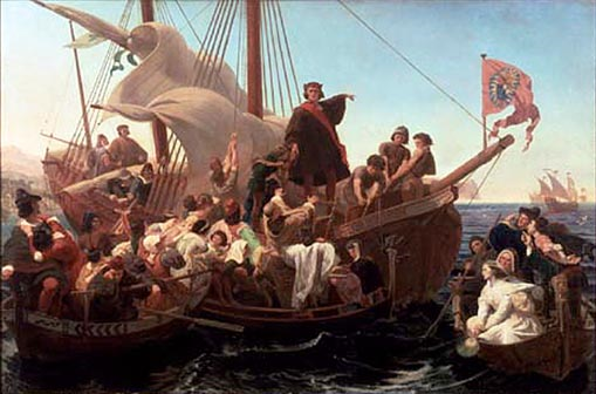
Here is the detail worth holding onto: the whole round trip took 224 days, and for eight of those months Columbus's investors had no idea where their money was — whether he was mapping a new world or had simply vanished with their gold. Visibility over the voyage was zero. Keep that in mind, because the ships were tiny — 25 to 50 feet, barely larger than a modern 20-foot container, about the size of a yacht you might charter for a week in the Mediterranean.
The scaleFrom three ships to thirty million boxes
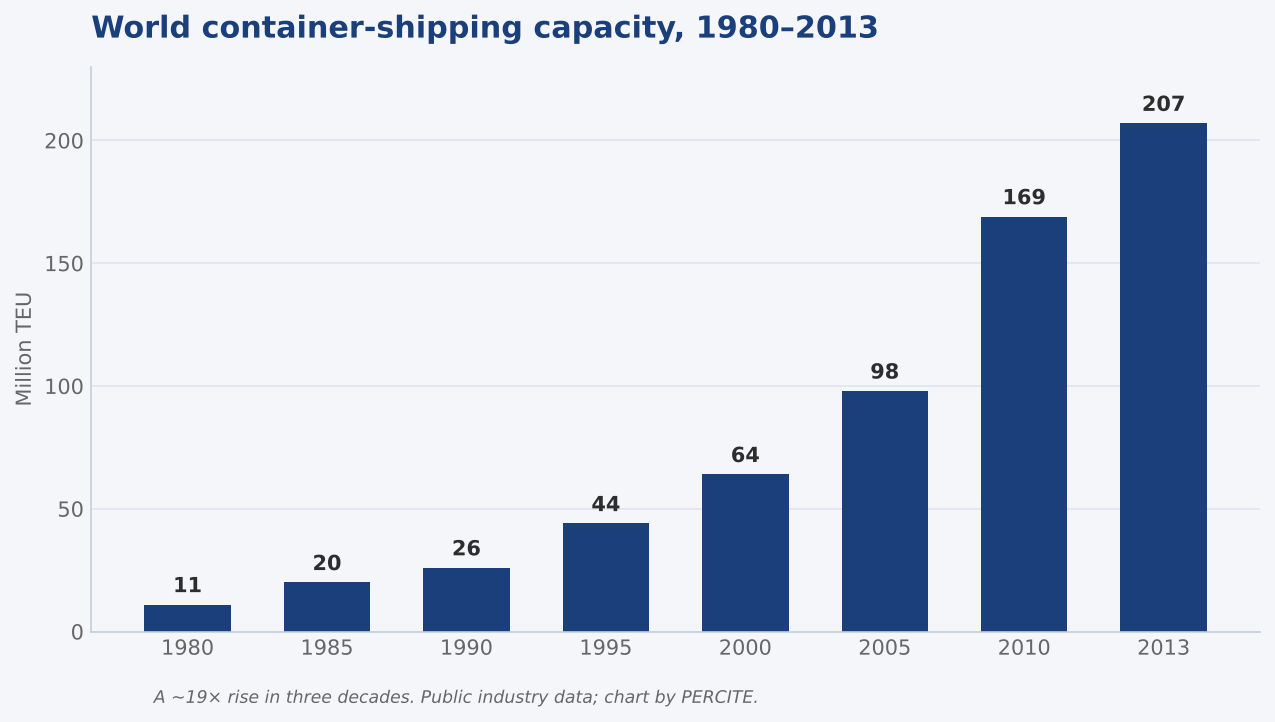
Five centuries on, the sea carries roughly thirty million containers a year across thousands of routes, from one end of the world to the other. The explorers who made it possible — Marco Polo overland, then da Gama round the Cape, Magellan through his strait, Cook to New Zealand and Australia — mapped a world whose charts served the merchant fleet well into the 1960s. What they opened, the twentieth century industrialised into a flood.
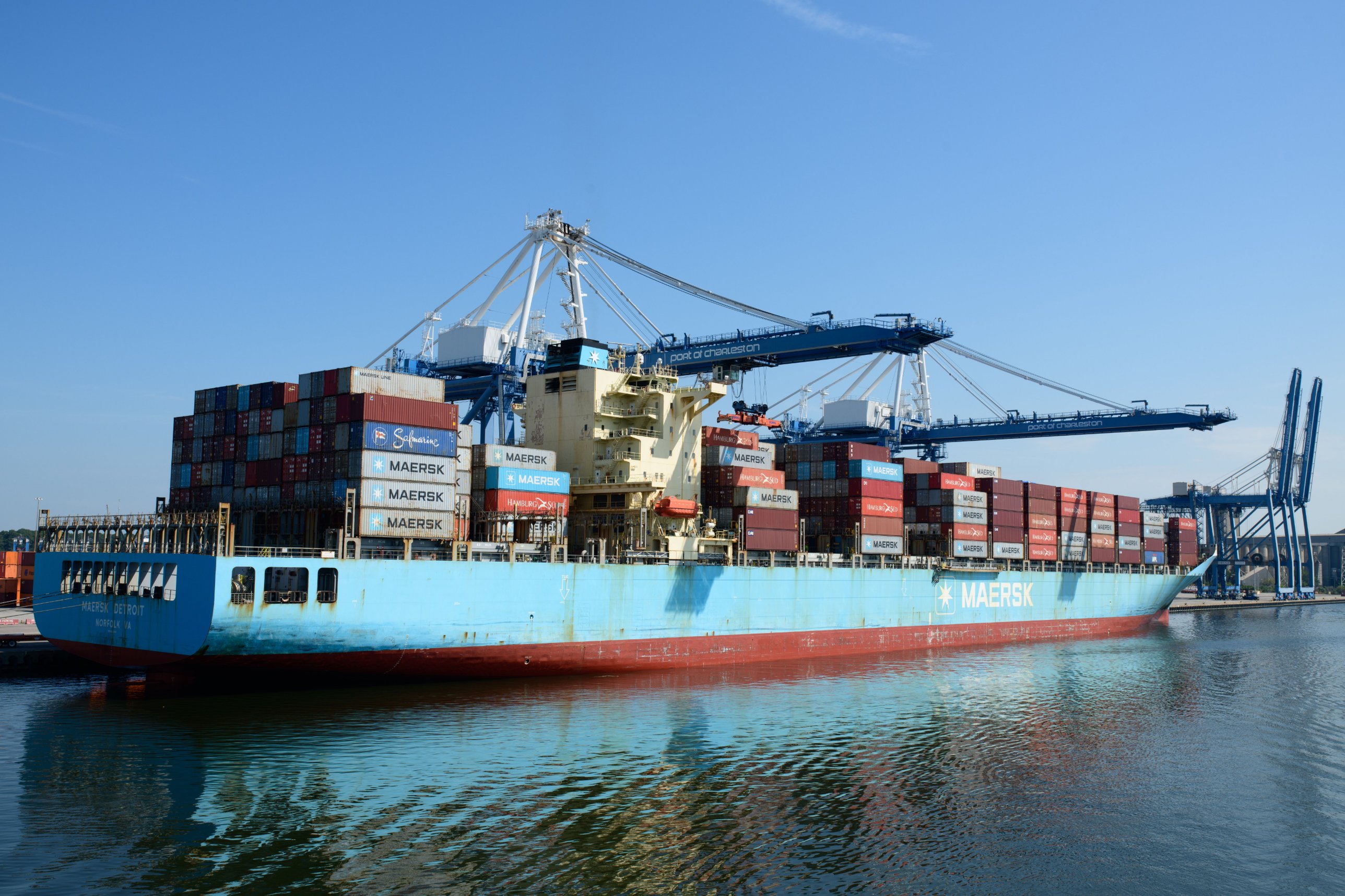
And the ships grew to match. Maersk's Triple-E class — the name stands for economy of scale, energy efficiency, environmental improvement — runs 400 metres long, with a propeller ten metres across, and carries about 18,000 forty-foot containers. At roughly $185 million a ship and a fleet of twenty, that is the power to move 360,000 containers in a single voyage — about what Israel's ZIM moves in an entire year.
The problemOne box, a dozen events, a dozen tongues
So what exactly were Isabella and Ferdinand complaining about — three ships, three containers' worth of cargo? A single box today passes through six to twelve events between leaving the carrier's pool and returning to it, and may carry anything from a few thousand dollars of goods to the one part a production line is waiting on. Take one container from Haifa to San Antonio, Chile: three ocean legs across two transshipment ports, roughly seventy days, a different vessel and voyage number on each leg. Multiply that by thousands of boxes, and no human desk can keep up.
It gets worse, because the market is fragmented and every carrier names things its own way. Even the biggest lines hold only slices of it:
| # | Carrier | Capacity (TEU) | Share |
|---|---|---|---|
| 1 | APM-Maersk | 2,616,413 | 16.7% |
| 2 | Mediterranean Shipping (MSC) | 2,185,806 | 13.1% |
| 3 | CMA CGM Group | 1,350,785 | 8.1% |
| 4 | COSCO Container Lines | 716,331 | 4.3% |
| 5 | Evergreen Line | 699,333 | 4.2% |
| 6 | Hapag-Lloyd | 635,233 | 3.8% |
Top lines by capacity, 2012 (Alphaliner) — and some sixty more carriers behind them, each with its own website, its own terms, its own codes.
Scrape all those websites for status? You replace carriers every other week, the computing budget is long gone, and cheap automation earns the old warning: pay peanuts, get monkeys. You could hire an export clerk fluent in the dialect of every shipping line — or you could get everyone to speak one language.
The answerA language for the sea
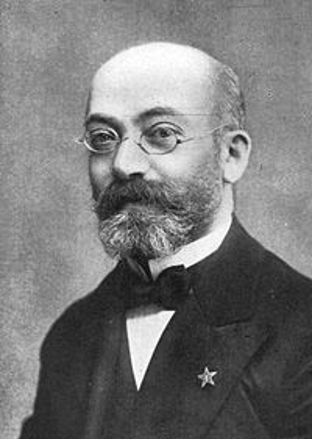
In 1887, after years of work, L. L. Zamenhof published Esperanto — a planned, neutral language meant to let peoples understand one another without the misreadings that different tongues breed. (About a million and a half people speak it today.) His idea was simple: much of human conflict is mistranslation. Ocean freight had exactly that disease — and it needed exactly that cure.
The cure arrived in two parts. First, standards — a shared vocabulary for everything that moves: IMO and MMSI to identify ships, SCAC for carriers, UN/EDIFACT and ANSI X12 for the messages, AIS and GPS to broadcast position in real time, agreed codes for every port and party. Second, a neutral portal that speaks it — INTTRA — sitting like a hub at the centre of the trade, wired electronically to the carriers, the forwarders, the consolidators and the shippers at once.
Get every party to speak one language, and the computers can watch the routine — because ILHFA is always the port of Haifa.
Through one portal an exporter can check which ships are sailing, on which rotation, calling which ports — then make the booking directly, and from that moment receive a clean stream of status on the box, all the way home. A skeptic — a friend who runs global logistics for a large manufacturer — tells me the data isn't always accurate. Of course it isn't; errors happen. But do we not already lose two containers in Singapore the old way? The point is that people stop doing the routine watching a machine can do, and spend their attention only on the anomalies.
The payoffWhere is my stuff?
And then one query answers the only question that ever really mattered — where is my stuff? — for every shipment at once, whoever handled it:
| Container | Event | Where |
|---|---|---|
| MRKU…0988 | Gated in | Haifa (ILHFA) |
| MRKU…0988 | Vessel load | Haifa (ILHFA) |
| MRKU…0988 | Vessel departure | Haifa (ILHFA) |
| MRKU…0988 | Vessel arrival | Algeciras (ESALG) |
| MRKU…0988 | Unloaded from vessel | Algeciras (ESALG) |
| MRKU…0988 | Gated out | San Antonio (CLSAI) |
| MRKU…0988 | Returned | San Antonio (CLSAI) |
The prize isn't only knowing. When the electrons fire as a box clears the port gate in New Jersey and ripple, domino-like, into a “left port of destination” event under CIF terms, a finance chief can finally book revenue recognition the moment ownership actually transfers — instead of chasing the field by phone every month, and every quarter-end. The INCO point stops being a guess.
It isn't finished, of course. Couriers speak their own language; so do the ground carriers; bringing them all to a common denominator is the slow, patient work of years. But the direction is set, and the destination is clear even though we'll never fully arrive —
“Goodbye,” said the fox. “Here is my secret. It is very simple: one sees clearly only with the heart. What is essential is invisible to the eye.”
— Antoine de Saint-Exupéry, The Little Prince
With thanks to the export, shipping and logistics managers — whose names we keep, gratefully, on file — who navigated these portals with us, and the one who ran a stable of thousands of containers a year with a meticulousness Columbus would have envied.