
A Rosetta Stone for Freight
A freight invoice is a cipher — surcharges, chargeable weights, cross-rates that shift by the day. A true story of one module that reads thousands of them in minutes, and catches the error no human eye could see.
Ten years through space, six billion kilometres, three of them in induced hibernation — all for a single moment. On 12 November 2014 the probe Rosetta released its lander, Philae, and set it down on a comet: a speck of primordial matter, hurtling, that humanity had chased across the solar system and met dead-on.
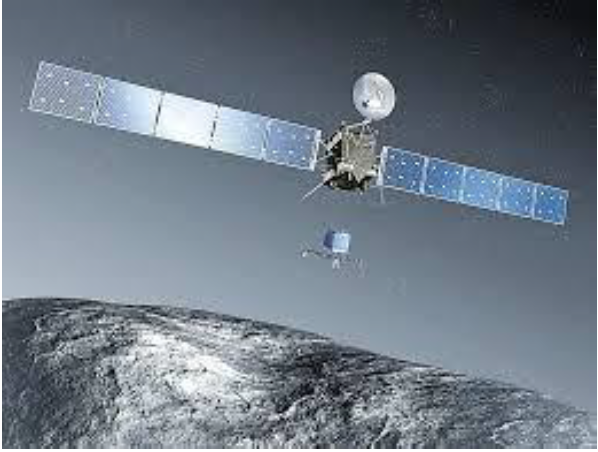
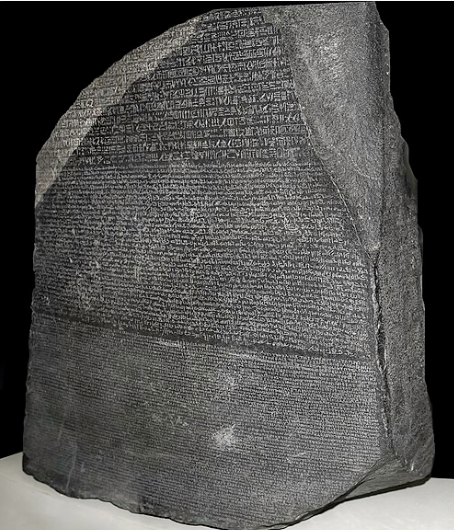
Why did the European Space Agency call it Rosetta? After the Rosetta Stone — 760 kilos of granite, unearthed at Rashid (Rosetta) in Egypt in 1799, carrying the same decree in three scripts: hieroglyphic, Demotic, and ancient Greek. The Greek was the key: read it, and a language silent for a millennium and a half spoke again. ESA borrowed the idea exactly — send a machine to translate the secrets locked in a comet's frozen body.
The cipher on your deskWhat this has to do with us
And what has any of that to do with someone who eats bitterness every morning because a ship is late, a container is stuck, and a stack of invoices has landed — freight, fuel surcharge, a dozen esoteric line items — all needing to be checked, again, against contracts, against weights, against exchange rates that move every single day and a fuel surcharge that bends to OPEC's mood? Everything. Because a freight bill is an undeciphered script, and most companies simply pay it, unable to read it.
That is what SAM — the Smart Freight Audit Module — was built to do (we've written about it in earlier notes). Its job is superhuman in the literal sense: to read the billing of sea and air carriers, understand the deal behind each shipment (the INCO terms, the services, the cargo type), derive the model the provider should have billed, forecast the expected cost to within a whisker, and then — the day the invoice arrives — check it and raise only the exceptions a human needs to see. Building such a thing is no Rosetta mission, granted. But it demands the same refusal to accept that a thing is unreadable.
The caseThousands of lines, months deep
So, a real story. An air-import operation came to us in genuine distress: hundreds of shipments a month, mostly airfreight, thousands of invoices a year — every one multi-line, every line exposed to a cross-rate that moved daily, arriving from dozens of origins into Israel. “How,” the audit manager asked, “do I verify — formally, reliably — thousands of such lines, retroactively, months back, when the organisation simply cannot do this Sisyphean work by hand?” And the rates kept changing: negotiated tariffs, weight-to-volume ratios, airline, cargo placement, all shifting through the very period in question.
SAM was stood up in the cloud — no waiting on the customer's IT — wired to the relevant shippers, and loaded with the whole period: thousands of transactions, scanned documents archived beside them, thousands of invoice lines to read.
The error no eye could seeVerified seven ways, and still wrong
Then the discovery that makes the whole case. One shipment failed SAM's check: the freight, it said, was over the threshold. The customer pulled the invoice and found it perfect — $2,000, exactly as agreed: price per kilo times the chargeable weight, and in shekels it all tied out. SAM disagreed. They rechecked the loaded pricing, confirmed it against the bill of lading, recomputed the weight, ran the arithmetic seven ways. Everything matched. SAM must be wrong.
The charge was right to the shekel. SAM still said it was wrong — and SAM was right.
They dug deeper, and there it was. The agreed pricing was denominated in Singapore dollars. The freight agent, loading the charge, had simply typed US dollars by mistake — then presented the invoice in shekels. SAM had carried the cross-rates all the way through — shekel to US dollar, US dollar to Singapore dollar — and the figures only reconciled under the right currency. No pocket calculator, no careful human eye, would ever have caught a currency typed wrong three conversions back.
The verdictWhat SAM found
Across the whole period, the module read thousands of lines in minutes and came back with this:
| SAM audit result | Outcome |
|---|---|
| Lines auto-approved | 66% — runtime in minutes |
| Lines passed within tolerance (within a shekel or two, or 0.5%) | hundreds, cleared without fuss |
| Lines held for human review | 20% |
| Months at near-perfect calibration | 3 of ~7, at 0.1% forecast vs actual |
| Overcharge detected | over 8% |
| Undercharge detected | about 2% |
Most of the deviation traced back to ordinary human error — a tariff maintained wrong on the billing side, a weight captured loosely in the field. But look at that overcharge figure and do the arithmetic the customer did: 8% of a freight budget that runs into the millions, found and recoverable, on work that used to be impossible. And three full months where forecast and actual agreed to one part in a thousand — not a thousandth of the bill out of place.
Like the Stone unlocked the hieroglyphs, SAM reads what freight billing hides: the errors no eye catches, thousands of lines in minutes, the money that was quietly slipping away. It isn't a comet mission. It's just the same stubborn belief — that nothing is truly unreadable, if you build the key.
“Things have a life of their own,” the gypsy proclaimed. “It's all a matter of waking up their souls.”
— Gabriel García Márquez. In our case, software — but with a soul.
With thanks to the audit and import managers — whose names we keep, gratefully, on file — who handed us thousands of unreadable lines and let us build the key.